
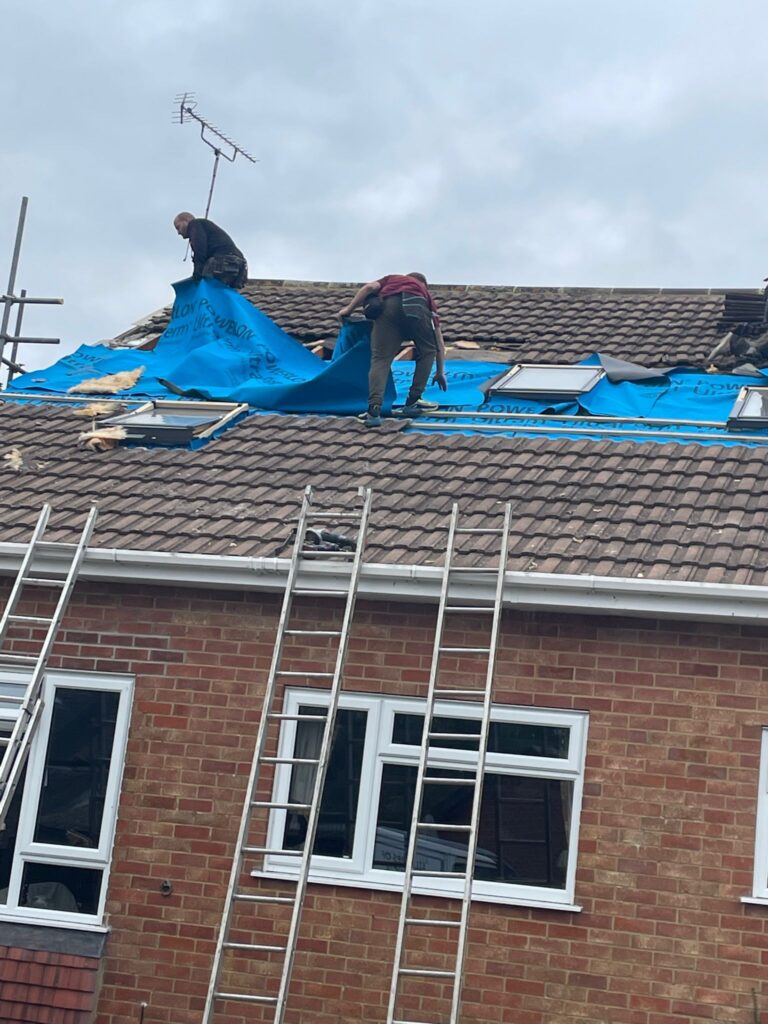
A roof leak during heavy rain can feel urgent and stressful. Water marks on the ceiling, dripping into a room, or damp spreading across a wall are all signs that something has failed above. Acting quickly can prevent further structural damage and reduce repair costs.
If you are unsure what to do if your roof starts leaking during heavy rain, the key is to stay calm, protect the inside of your property, and avoid unsafe DIY attempts. In areas like Huddersfield, where periods of intense rainfall are common, even a small roofing defect can allow water to enter under pressure.
This guide explains the immediate steps to take, what causes roof leaks in heavy rain, and when it is time to contact a professional roofer.
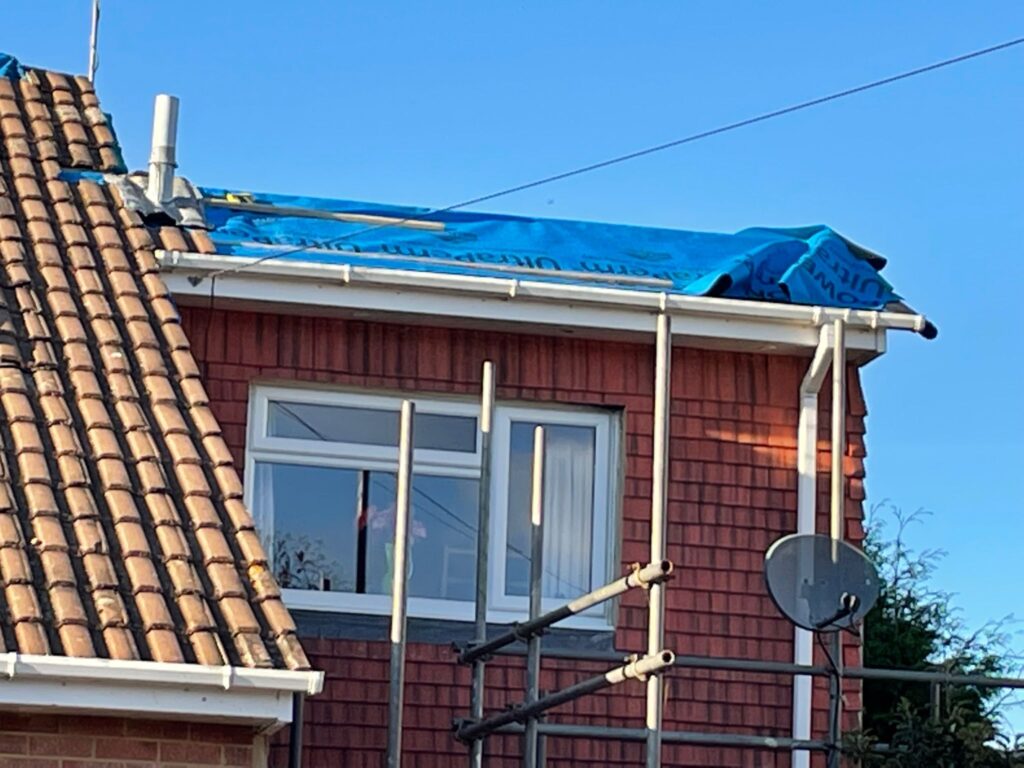
Why Does A Roof Leak More During Heavy Rain?
Many roofs cope with light showers but fail under sustained rainfall. This usually indicates an existing weakness.
Common causes include:
- Cracked or missing tiles
- Damaged ridge lines
- Deteriorated lead flashing
- Blocked gutters forcing water under tiles
- Flat roof membrane splits
- Failing pointing around chimneys
Heavy rain increases hydrostatic pressure. When wind drives water beneath tiles, it can travel laterally before appearing inside the property. This is why the visible leak may not sit directly below the fault.
What Should You Do If Water Is Coming Through The Ceiling?
If your roof starts leaking during heavy rain, focus on damage control before thinking about repairs.
1. Protect The Interior
- Place buckets or containers under active drips
- Lay down towels or plastic sheeting
- Move furniture and electronics away
Preventing secondary damage reduces repair costs significantly.
2. Check The Loft If Safe
If accessible and safe, inspect the loft for:
- Active drips
- Wet insulation
- Light coming through the roof
Do not attempt to walk on unsupported areas.
3. Relieve Ceiling Pressure Carefully
If you see a bulging ceiling filled with trapped water, controlled release can prevent collapse. This should only be done if safe and you are confident doing so.
4. Do Not Climb Onto The Roof
Wet tiles are extremely slippery. Attempting DIY repairs in heavy rain increases the risk of serious injury.At this stage, you may require professional assessment. Our detailed repair process is outlined on our roof-repairs page.
Can You Temporarily Stop A Roof Leak Yourself?
Temporary measures can reduce internal damage but will not fix the underlying issue.
Short term options include:
- Using plastic sheeting internally
- Clearing obvious gutter blockages
- Diverting dripping water safely
However, if the issue persists during rainfall, you may require emergency roof repair services to prevent structural deterioration.
How Do Roofers Identify The True Source Of A Leak?
Water rarely enters directly above the visible stain. It can travel along rafters before dripping.
Professional inspection typically includes:
- Checking tile alignment
- Inspecting ridge and verge integrity
- Assessing flashing around chimneys
- Evaluating flat roof membranes
- Inspecting underlay condition
In many cases across Huddersfield, what appears to be a tile failure turns out to be flashing deterioration or mortar fatigue. Accurate diagnosis prevents repeat call outs.
When Does A Leak Become An Emergency?
Not every leak requires immediate emergency intervention, but certain warning signs do.
Call for urgent support if:
- Water is entering rapidly
- Electrical fittings are affected
- Ceiling bulges appear
- Large areas of tiles are displaced
- Storm debris has damaged the roof
In these situations, storm damage repair may be required to stabilise the roof before permanent repair is completed.
What Happens If You Ignore A Roof Leak?
Delaying action can lead to:
- Timber rot
- Insulation saturation
- Mould growth
- Plasterboard failure
- Structural weakening
Moisture trapped in roof timbers accelerates decay. Over time, what started as a minor issue can require partial re-roofing.
Addressing a roof leaking in heavy rain early prevents escalation.
How Can You Prevent Roof Leaks In The Future?
Professional inspections identify cracked tiles, loose ridges, and flashing issues before winter weather exposes them.
Gutter Maintenance
Blocked gutters cause overflow and backflow beneath roof edges.
Chimney Flashing Checks
Lead flashing fatigue is a frequent cause of leaks in heavy rain.
Flat Roof Surface Monitoring
Flat roofs should be checked for membrane splits and pooling water.
Routine checks are particularly important for properties across Huddersfield, Mirfield, and Brighouse, where winter rainfall can be prolonged.
View Our Roof Services
When Should You Arrange Professional Help?
Arrange inspection if you notice:
- Persistent damp smells
- Repeated leaks during rainfall
- Visible roofline movement
- Chimney flashing cracks
- Water pooling on flat roofs
If you would like to learn more about our experience and background before arranging an inspection, you can read more about our team and approach on our About Us page.
Arrange Roof Leak Repairs in Huddersfield Before Further Damage Occurs
If your roof is leaking during heavy rain in Huddersfield, prompt action can prevent more extensive structural issues. While temporary measures may reduce immediate water ingress, a professional inspection is the safest way to identify and resolve the underlying cause.
If you are noticing repeated leaks, storm damage, or visible roof movement, contact Alta Roofing today to arrange an inspection and receive clear advice on the next steps.
