
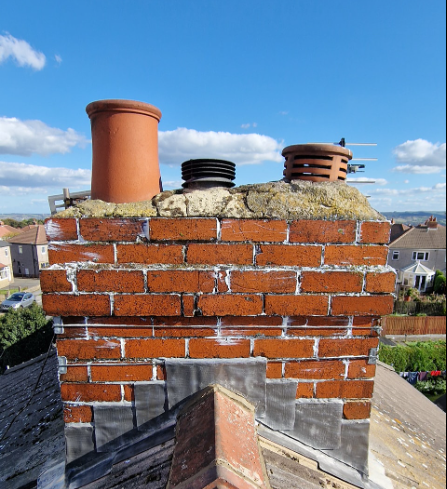
Chimney leaks are commonly caused by deteriorating mortar, damaged lead flashing, failed flaunching, cracked masonry or defects where the chimney meets the roof. Because water can travel through a roof structure before appearing indoors, the source of a chimney leak is not always directly above the damp patch you can see.
Finding the actual entry point is therefore the most important part of repairing a leaking chimney. The right solution could range from repointing a few deteriorated joints to renewing flashing or carrying out more extensive masonry repairs.
Where Does Water Usually Get Into a Chimney?
A chimney passes through the roof covering and contains several exposed joints and materials. These junctions have to remain weather-resistant despite years of rain, wind, frost and temperature changes.
The most common causes of chimney leaks include:
- Deteriorated mortar joints
- Failed or displaced lead flashing
- Cracked bricks or stonework
- Damaged chimney pots
- Deteriorated flaunching
- Defects in the surrounding tiles or slates
- Water entering an open or poorly protected flue
- Condensation within a blocked or poorly ventilated flue
It is important not to assume that the chimney itself is always responsible. A damaged tile, roof valley or section of flashing nearby can allow water to travel towards the chimney before it becomes visible inside the property.
The Main Causes of a Leaking Chimney
Understanding where chimney leaks originate makes it easier to see why an inspection is normally needed before repairs are recommended.
Deteriorated Chimney Pointing
The mortar between bricks or stone helps keep the chimney stable and weather-resistant. Over time, exposed mortar can crack, crumble or wash out.
Open joints provide routes for rainwater to penetrate the chimney stack. Repeated wetting can also accelerate deterioration, particularly during colder conditions when moisture freezes and expands.
A chimney may need repointing when the masonry remains serviceable but the surrounding mortar has deteriorated.
Damaged Lead Flashing
Flashing seals the junction between the chimney and the roof covering. Historic England describes these junctions as particularly vulnerable areas of a roof and recommends inspecting flashing for movement, failed joints and deterioration.
Leadwork can become loose, split or displaced over time. Mortar securing the flashing into the chimney can also deteriorate.
When this happens, rainwater may run behind the flashing rather than being directed safely onto the roof covering.
Failed Chimney Flaunching
Flaunching is the mortar around the base of chimney pots at the top of the stack. Its job includes securing the pots and helping water drain away from the top of the chimney.
Cracks or deterioration can allow moisture into the upper masonry. Depending on its condition, repairs may involve localised work or renewing the flaunching around the pots.
Cracked Brick or Stonework
Chimney stacks are highly exposed sections of a building. Cracked, loose or badly weathered masonry can absorb or admit water.
Historic England notes that chimney damp can result from cracks, worn pointing, inadequate flaunching and water penetration through the walls of the stack itself.
Older stone-built properties can require particular care because inappropriate repair materials may perform differently from the original masonry.
Problems Around the Roof Covering
Sometimes what appears to be a chimney leak begins with the surrounding roof.
Slipped slates, cracked tiles, deteriorated underlay or defects around valleys and roof junctions can allow rainwater beneath the covering. Water can then travel along timbers or other surfaces before appearing close to the chimney breast.
That is why treating an internal damp mark without investigating the surrounding roof can result in the real defect being missed.
What Are the Signs of a Chimney Leak?
Some chimney leaks are obvious during heavy rain, while others produce more gradual symptoms.
Warning signs can include:
- Brown or yellow staining around a chimney breast
- Damp plaster near the ceiling
- Peeling paint or wallpaper
- Damp smells in an upstairs room or loft
- Moisture around chimney timbers
- Crumbling mortar visible from ground level
- Loose or displaced flashing
- White salt deposits on chimney masonry
- Recurring damp after rainfall
The timing of the problem can be useful. Damp that becomes noticeably worse after rain may point towards external water penetration, although an inspection is still needed to establish the source.
Internal moisture does not automatically mean there is a roof leak. Condensation within a chimney or flue can sometimes produce similar symptoms, particularly where ventilation has changed.
How Is a Chimney Leak Diagnosed?
A useful chimney inspection looks beyond the first visible defect.
A roofer may assess the chimney stack, pointing, flashing, pots, flaunching and the roof covering immediately around the chimney. The position of internal staining and the condition of accessible loft areas can provide additional clues.
The aim is to establish how water is entering rather than simply sealing the area where damp happens to appear.
For roofs that are difficult to inspect safely from conventional access points, a drone roof survey can provide detailed images of visible chimney and roof defects.
Homeowners should avoid climbing onto the roof to investigate a leak. Work at height requires appropriate planning, equipment and competence, as outlined in Health and Safety Executive guidance on working at height.
How Are Chimney Leaks Repaired?
The correct repair depends on what the inspection finds. There is no single treatment that fixes every leaking chimney.
Common repairs include:
Repointing Failed Mortar
Loose or deteriorated pointing can be removed and replaced with suitable mortar. The repair needs to address failed joints while remaining appropriate for the existing masonry.
Repairing or Renewing Flashing
Loose or damaged lead flashing may need to be refixed, repaired or replaced so the roof-to-chimney junction is properly weatherproofed again.
Repairing Masonry Defects
Cracked or deteriorating bricks, stonework or other parts of the stack may require targeted masonry repairs. More extensive deterioration should be assessed before individual defects are patched.
Renewing Damaged Flaunching
Failed flaunching around chimney pots can be removed and renewed where necessary to restore protection to the top of the stack.
Repairing the Surrounding Roof
If water is entering through damaged slates, tiles or another nearby roof defect, the chimney may require little or no work. Instead, the appropriate roof repair should address the actual source of the leak.
This is why diagnosis matters. Applying sealant to the most obvious joint without establishing why water is entering can conceal the symptom without providing a lasting repair.
Can a Chimney Leak Be Left Until Later?
It is generally better to investigate persistent water ingress early.
Moisture entering around a chimney can affect plaster, insulation, roof timbers and surrounding finishes. Mortar and masonry that are already deteriorating may also continue to worsen when repeatedly saturated.
Not every damp mark means extensive repairs are required. A relatively localised flashing or pointing defect may be sufficient to explain the problem. Finding that out early gives you a clearer understanding of what actually needs attention.
If water is actively entering your home during severe weather, our guide to what to do if your roof starts leaking explains the immediate steps you can take while arranging professional advice.
Can Regular Checks Help Prevent Chimney Leaks?
Regular visual checks can help identify deterioration before it produces noticeable internal water damage.
From ground level, look for obvious changes such as:
- Crumbling or missing pointing
- Leaning or displaced pots
- Loose flashing
- Cracks in the stack
- Vegetation growing from masonry
- Missing or displaced roofing materials nearby
You can also read our guide to how often a roof should be inspected for more advice on routine roof checks.
Frequently Asked Questions
Why Does My Chimney Only Leak During Heavy Rain?
Wind-driven or prolonged rain can expose defects that may not admit noticeable water during lighter rainfall. Failed flashing, open mortar joints and cracks in masonry are possible causes. The direction of the wind can also influence where rain reaches the chimney, so an inspection is usually needed to identify the precise entry point.
Does a Leaking Chimney Always Need Repointing?
No. Repointing is appropriate when deteriorated mortar joints are allowing water into otherwise serviceable masonry. Chimney leaks can also come from flashing, flaunching, surrounding roof coverings or other defects, so repointing should not be assumed to be the solution before the area has been assessed.
Can Lead Flashing Cause a Chimney Leak?
Yes. Flashing is designed to weatherproof the junction between the roof and chimney. If it becomes split, loose, displaced or poorly sealed into the masonry, rainwater can penetrate the junction and enter the roof structure.
Why Is My Chimney Breast Damp but the Roof Looks Fine?
Water can travel within the roof structure before becoming visible indoors, so the external defect may not be obvious from ground level. Damp around a chimney can also result from moisture entering the stack or, in some circumstances, condensation within the flue. Professional inspection can help distinguish between these causes.
Can Chimney Leaks Be Repaired Without Rebuilding the Stack?
Often, yes. Localised defects may only require work such as repointing, flashing repairs, flaunching repairs or replacement of damaged masonry. Rebuilding would normally only be considered where the condition of the stack makes more extensive work necessary.
Get the Cause of a Chimney Leak Checked Properly
A damp chimney breast does not tell you exactly where water is entering. The most effective repair starts with identifying whether the problem lies with the pointing, flashing, masonry, flaunching or the surrounding roof.
Alta Roofing provides chimney repairs backed by more than 15 years of hands-on roofing experience. If you have noticed damp, damaged mortar or another possible chimney problem, we can assess the roof and explain the appropriate next steps.
Arrange a Chimney Inspection & Request a Quote